Wednesday, 29 September 2010

Kirksanton


28 September 2010
Present: AM, JS, KH, CG, RG, and JAF.

The site is a new one for the 01229 Group, a stubblefield which had been used recently by flocks of finches and buntings. We decided to give it a try. It was a successful morning with 40 new birds representing 14 species:
Meadow Pipit 2; Wren 2; Dunnock 5; Robin 3; Blackbird 1; Song thrush 2; Whitethroat 1; Chiffchaff 1; Coal Tit 1; Great Tit 1; Tree Sparrow 7; Chaffinch 1; Yellowhammer 8; Reed Bunting 5.


Kirksanton lies on the coast north from Millom and South from Silecroft.

 200 feet of single shelf net across the stubble field did catch some birds 
but most were caught near the hedges around the edge of the field

 Ken, Colin and Rosalyn looking busy

 This Yellowhammer was one of 8 ringed
 
A smart looking Tree Sparrow
Roslyn extends her training experience with a Tree Sparrow

Tuesday, 28 September 2010

101 Scored at Eskmeals September Visit.

Present; AM, JS, CG, RG, and KH.
Although bright and sunny 101 birds caught . Ninety new birds and eleven (retraps). The 14 species were as follows: Wren 2, Dunnock 9, Robin 14(4) , Blackbird 2(1) , Blackcap 1(1) , Chiffchaff 1 , Goldcrest 2(1) , Long-tailed Tit (9) , Coal Tit 3(2) . Blue Tit 15(1) , Great Tit 8 , Chaffinch 7 , Greenfinch 5 , Bullfinch 12(1)


Ringer and Bird, Colour Co-ordinated.
Juvenile Goldcrest  5.8 Grammes (he will be a big help to his mum when he grows up.)

Saturday, 4 September 2010

Next Ness 3 September 2010

Present: JAF
42 birds processed, 34 new. This brings the total birds ringed at this site in the last two visits to 101.
Birds processed (retraps in brackets): Dunnock (1); Blackcap1; Chiffchaff 3; Blue Tit 20 + (3); Great Tit 3 + (2); Treecreeper 1 + (1); Chaffinch 3 + (1); Bullfinch 3.


Juvenile male Bullfinch undergoing partial post-juvenile moult

The path through the Cumbria Wildlife Trust reserve at Next Ness 
runs parallel to the railway line (on the left) and looks overgrown at this time of year.

Tuesday, 31 August 2010

Walney Golf Course

31 August 2010 Present: KH; JAF
23 new birds ringed: Wren 1; Dunnock 2; Robin 3; Blackbird 5; Blackcap 1; Blue Tit 5; Great Tit 3; Chaffinch 3.

Walney Golf Course site - the reed beds have extended considerably over the summer

Adult Dunnock in heavy wing and tail moult

Saturday, 21 August 2010

Eyed Hawk Moth found when cutting rides


                                                                                                                           Photograph Rosalyn Gay

Friday, 13 August 2010

Record catch at Next Ness

13th August 2010
Present: KH, JAF
67 Birds processed, 65 new (retraps in brackets): Wren 1; Dunnock 2; Blackbird 1; Chiffchaff 3; Coal Tit 2; Blue Tit 31 (1); Great Tit 19 (1); Treecreeper (1); Chaffinch 6.
This represents the largest catch by far at this ringing site.

This juvenile Chaffinch undergoing post-juvenile moult has enough pink breast feathers 
growing thorough to be able to sex it as male

You can see more pictures and information about our Next Ness site here.

Thursday, 12 August 2010

Siskin at Roudsea

12  August 2010
Present: JAF
30 birds processed (retraps in brackets): Marsh Tit: 1 (2); Coal Tit 6; Blue Tit 6 (1); Great Tit 8 (1); Nuthatch 1; Siskin 1; Redpoll 3.

This crazy young Siskin was attracted to a Redpoll tape!

This handsome male Redpoll was among the three that were caught

Sunday, 8 August 2010

Growth bars at Askam Park

Present ES, JAF; 8 August 2010
Just eight birds processed before the kids got up and start playing in the park.
Blackbird 3; Dunnock 1; Robin 1; Chaffinch 1; House Sparrow 2.

Here are more pictures of Askam Park

Emily has to watch her head as she rings a Blackbird under the tailgate of my X-trail


This juvenile House Sparrow displays a conspicuous growth bar in the tail. 
Evidently there was a period of curtailed growth - perhaps during heavy rain

Thursday, 5 August 2010

Getting into moult at Roudsea


4th August 2010
Present: KW and JAF
We erected 5 x 18m and 2 x 12m nets, one at a baited site.
We processed 32 birds of which 6 were retraps (in brackets) : Great Spotted Woodpecker (1); Wren 1; Robin 1; Blackcap 2; Chiffchaff (1); Willow Warbler 3; Marsh Tit 3; Coal Tit 3; Blue Tit 4 (1); Great Tit 4 (3); Redpoll 5.

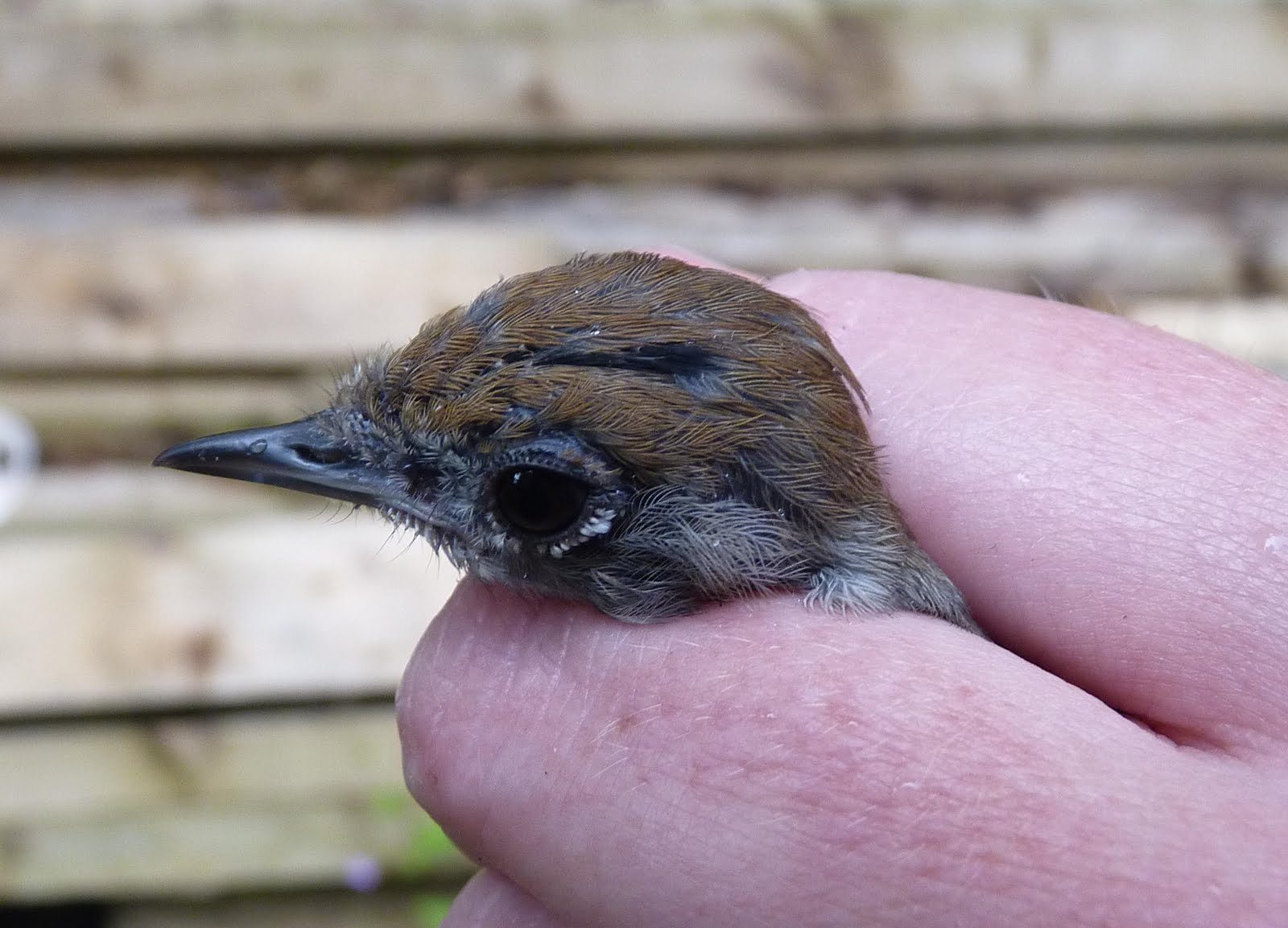
A single black feather in the crown is sufficient to sex this juvenile Blackcap as a male

Kim undertakes her first primary moult score with this Great Tit

A rather moth-eaten looking adult Blackcap in active primary moult (three feathers in the centre are growing)

Monday, 26 July 2010

Friday Night Saturday Morning

Date 23/24/07/2010.  Present:  RG; CG; AM; JS and KH.
There were twenty species ringed and one-hundred and fifteen birds processed. They were as follows,( re-traps).   Wren 3(1),  Swallow 2, Dunnock 8, Robin 14(1), Blackbird 6, Song Thrush 1, Lesser Whitethroat 4, Whitethroat 4, Blackcap 7(1), Chiffchaff 10(1), Willow Warbler 9(1), Goldcrest 7, Long-tailed Tit 1, Coal Tit 5, Blue Tit 5(1), Great Tit 11(1), Jay 1, Chaffinch 2, Redpoll 4, Bullfinch 3.
As would be expected over 100 of the birds were aged "3" or "3J"
Below is a photo. of something that caused a minor diversion from ringing.  As ringers, some of the party, regard these as simply exotic bird food.

Brown-tailed Moth
Photograph A.M.


Dunnock admiring Colin.  Sorry Colin no room for photo. of you admiring the Dunnock

Thursday, 15 July 2010

Final Foulney Figures

Present JS and KH.
The Foulney pullus ringing season lasts only 4 weeks and here are the final figures.
Little Tern 4, Ringed Plover 16, Attic Tern 20 and Oystercatcher 10. The number of birds fledged was considerably higher for all species than those ringed with Ringed Plover and Little Tern doing particularly well.  David this years warden was very dedicated and well done the rest of the Cumbria Wildlife Trust team.

Thursday, 1 July 2010

Seaside Visit 30/06/2010

Present KH, JS and MW.
The following pullus were ringed. Oystercatcher 1, Artic Tern 10, Ringed Plover 8, Little Tern 2.
The Ringed Plover and Oystercatchers over the years have evolved faster sprinting speeds.  To counter this the net below has been developed and patented.

Maynall's back-hand cross beach stroke was that fast we were unable to take photographs so these stills will have to suffice